Primitive Crow & Pear Family Embroidery Review
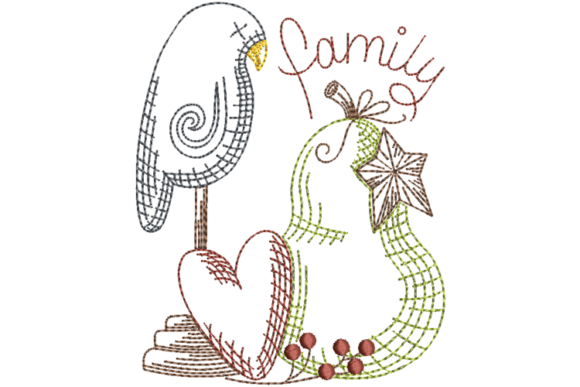
As an embroidery designer who has prepped hundreds of designs for craft fairs and handmade markets, I have learned to judge a machine embroidery design within seconds. Some files look lovely on screen but fall apart in production. Others lack the visual punch needed to stop a shopper mid-stride. When I first opened Primitive Crow and Pear Family Embroidery, I immediately felt the warmth of a farmhouse kitchen. The primitive-style bird, the checked pear, the patched heart, the stitched star, and that curly script spelling “family” all work together to create a design that feels nostalgic, grounded, and deeply handmade. Let me walk through exactly how this embroidery file performs when you turn it into products for your booth or shop.
First Impression: Rustic, Warm, and Market-Ready
The moment I saw the composition, I knew this was not trying to be trendy. It is not modern, not minimalist, not cleverly funny. Instead, Primitive Crow and Pear Family Embroidery leans into a classic folk aesthetic. The crow stands with a quiet, almost stoic presence beside the pear, which is filled with a checked pattern that immediately reads as homespun. The heart looks purposefully patched, the star looks hand-stitched, and the word “family” flows in that beloved curly script that feels both vintage and personal. It is the kind of design that makes a customer stop, smile, and think that reminds me of grandma’s kitchen. For a craft fair product, that emotional response is gold. You cannot fake that feeling with a generic font or a clip-art bird. The primitive style here feels intentional, and that matters when buyers are deciding between your booth and the next.
Where This Design Shines in Your Booth
After testing Primitive Crow and Pear Family Embroidery on several product blanks, I can tell you it performs beautifully on flat or gently curved surfaces with enough space to let the details breathe. Here is where I would use it for maximum sales impact:
- Tote bags: The design works as a centered focal piece on a natural canvas tote. The primitive style looks especially good against unbleached cotton or linen. The checked pear and stitched star pop without feeling busy. I would place the embroidery about three inches below the top edge so it sits naturally when the bag is carried.
- Tea towels and kitchen towels: This is probably the strongest product match. The rustic farmhouse feel aligns perfectly with a linen or cotton tea towel. The design reads as a decorative accent, neither too large nor too small. On a towel, the crow and pear become a charming kitchen vignette. I would use a light or medium-weight towel with a tight weave to keep the lettering crisp.
- Aprons: A half-apron or full bib apron gives enough fabric real estate for the full design. The word “family” on an apron feels natural because aprons are associated with home and hospitality. I would center it on the bib or place it as a pocket accent.
- Pillow covers and small pouches: For a booth display, a throw pillow with Primitive Crow and Pear Family Embroidery creates a cozy home vignette that stops traffic. Pouches with a zipper or drawstring make great impulse gifts, especially when the design is scaled to fit a smaller surface.
- Patches: I would definitely produce iron-on or sew-on patches using this design. A patch version allows customers to add the primitive crow and pear to their own jackets, bags, or quilts. That DIY appeal extends your product line without extra production time.
- Caps: The design can work on a structured cap if you pay attention to placement. Keep it on the front center panel and avoid placing the word “family” too close to the cap seam. I would not use this on a curved brim or narrow side panel.
Practical Selling Points for Your Craft Fair Table
When I evaluate a machine embroidery design for market production, I ask three questions: Is it easy to understand at a glance? Does it work at multiple sizes? Can I make it repeatedly without quality loss? Primitive Crow and Pear Family Embroidery scores well on all three.
The composition is straightforward. A shopper walking past your booth sees a bird, a fruit, a heart, a star, and the word family. They do not have to squint or puzzle over the meaning. The primitive style actually helps here because the shapes are simplified and the stitch work feels clean. That instant readability is critical for craft fair products where attention spans are short and competition is high.
For batch production, the design is efficient. The stitch density appears moderate based on the description, which means you can stitch multiple pieces per hour without excessive thread changes or hoop re-positioning. The number of thread colors is not specified in the product details, but the description mentions a checked pear, a patched heart, a stitched star, and a curly script word. I would recommend confirming the exact color count before you commit to bulk production. If it stays within four to six colors, this design is a solid workhorse for your Etsy seller inventory or your booth stock.
Photography for online listings is another advantage. The primitive aesthetic photographs beautifully on natural backgrounds like wood, linen, or burlap. The checked pattern in the pear and the stitched star provide texture that shows up well in product photos. The word “family” in curly script gives the design a clear focal point that thumbnail images can communicate. As a digital embroidery file, this design translates into listing photos that feel warm and lifestyle-oriented, exactly what handmade market buyers respond to.
Careful Use Notes: What to Watch During Production
No design is perfect for every surface, and Primitive Crow and Pear Family Embroidery has a few considerations that any experienced embroiderer should note before running a production batch.
- Small lettering: The word “family” appears in curly script. Curly scripts often have thin strokes and tight curves. If you scale the design down too much, the letters can become muddled. I recommend testing the design on scrap fabric at your intended size before committing to a run of towels or pouches. If the letters lose definition, increase the hoop size slightly.
- Dense stitch areas: The checked pear and patched heart likely contain fills that require moderate stitch density. On thick fabrics like canvas or denim, this is usually fine. On lightweight fabric, you may need a tear-away or cut-away stabilizer to prevent puckering. Always test on the actual fabric you plan to use.
- Texture and towels: Terry cloth or highly textured towels can bury fine details. The checked pattern and the star may lose clarity if the fabric is too fluffy. Stick with smooth-weave kitchen towels or linen for best results.
- Curved cap surfaces: If you decide to embroider this design on a cap, be mindful of how the lettering sits on the curved front panel. Curly script can distort if the cap is not hooped correctly. Use a cap frame and test one sample before producing multiples.
- Dark fabric: The primitive bird and pear will show best on light to medium fabrics. On dark fabric, the thread contrast must be strong enough that the checked pear and stitched star do not disappear. Consider using a white or light underlay if you stitch on black or navy.
- Hoop size and spacing: Confirm the recommended hoop size from the digital embroidery file before you start. The design includes multiple elements, so it likely requires at least a 5x7 hoop to maintain proper spacing. Do not crowd the elements; the open space around the crow and pear is part of the primitive charm.
Visual Appeal and Booth Display Strength
In a craft fair setting, you have maybe three seconds to catch a customer’s eye. Primitive Crow and Pear Family Embroidery earns those seconds with its balanced layout and warm color palette. The crow provides a strong silhouette, the pear adds a recognizable shape, and the heart and star bring in symmetry. The word “family” in curly script softens the overall look and gives it emotional weight. When displayed on a tote bag or tea towel, the design reads as a complete little scene, not just a random collection of motifs. That coherence is what makes a handmade product feel curated rather than chaotic.
For booth display, I would group several products featuring this design together: a towel, a tote, an apron, a pillow, and a patch. The repetition of the same motif across different items creates a cohesive brand look. Customers often buy more than one item when they see a pattern they love on multiple surfaces.
Practical Embroidery Designer Notes Before You Sell
Before I would take Primitive Crow and Pear Family Embroidery to a weekend market or list finished products on Etsy, I always follow a short checklist. Here is what I recommend you do as well:
- Test the design on scrap fabric that matches your product blanks. Check stitch quality, thread tension, and design registration.
- Review thread contrast. The checked pear and patched heart rely on clear color separation. If the threads blend together, the design loses its primitive charm.
- Check spacing. Make sure the crow, pear, heart, star, and the word “family” are positioned with enough breathing room. Crowded elements look messy, especially on a tote bag or towel.
- Confirm hoop size. The product description does not specify hoop size, so look at the embroidery file details or measure the design dimensions before planning your production run.
- Inspect stitch density. If any area feels too dense, adjust underlay or stabilizer to prevent fabric distortion. If an area feels too sparse, the design may look unfinished.
- Use the right stabilizer. For tote bags and aprons, a medium-weight cut-away stabilizer works well. For patches, use a tear-away with a fusible backing.
- Create at least one real mockup. A photo of an actual finished product is worth more than any digital mockup for your Etsy listings or booth signage. Customers trust real stitch work over computer-generated previews.
- Compare fabric colors. This design thrives on natural, earthy backgrounds. Test it on cream, oatmeal, sage, or soft brick red to see which combination sells best at your market.
- Confirm commercial licensing. Before you sell any finished product featuring this machine embroidery design, verify the license terms included with your purchase. Some digital embroidery files allow unlimited commercial use, while others require a separate commercial license. Do not assume; read the terms.
Final Thoughts on Primitive Crow and Pear Family Embroidery
I have reviewed many embroidery files that promised farmhouse charm but delivered generic clip art. Primitive Crow and Pear Family Embroidery is not one of them. The design carries a genuine handmade feel that resonates with craft fair shoppers and handmade market buyers. It works on multiple product formats, it photographs well for online selling, and it supports batch production efficiently. For any embroidery business owner, Etsy seller, or boutique maker who creates products for home decor, kitchen gifts, or personalized family items, this design is a strong addition to your digital collection. Do your due diligence with testing, stabilizer, and thread contrast, and this primitive crow and pear will find a welcome home in your booth and in your customers’ homes.